Listeners:
Top listeners:
00:00
00:00
volume_up
chevron_left
-
 play_arrow
Costa Blanca Radio The Sound Of The Costa
-
 play_arrow
FeelGood Radio The Sound Of The Costa
music_note
Why curtains in Spain are a functional part of the home
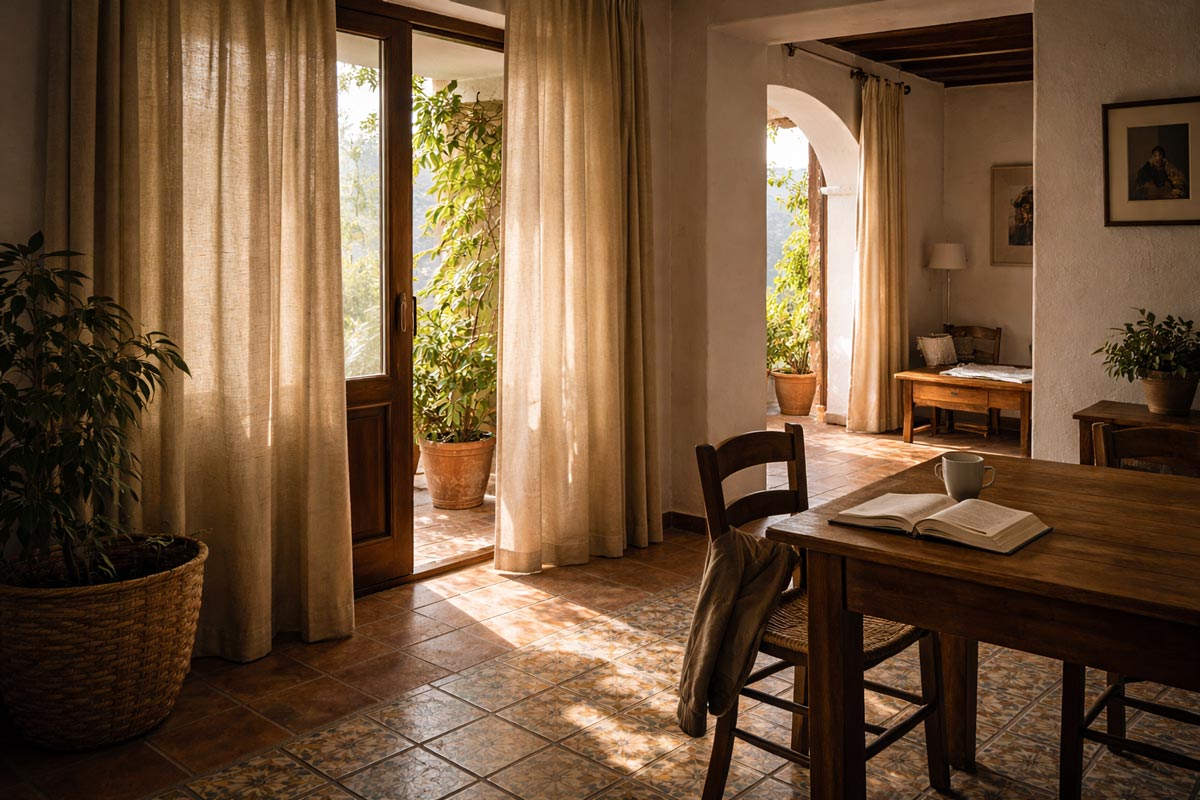
Curtains in a Spanish home move with the day. They don’t automatically open when you wake up, and they don’t close simply because it’s evening. Sometimes they stay half closed while the sun is shining. Other times they open at a moment that doesn’t seem logical at all.
That has little to do with atmosphere. And everything to do with timing.
Light as an active force
In Spain, light isn’t a background element. It’s a force you work with. The sun warms, blinds, casts shadows and determines where you want to be. Curtains aren’t there to “finish” a window — they’re there to guide that force.
In the morning, they may open to let warmth in. Later in the day, they soften the light. Towards evening, they don’t close because it’s “time”, but because the temperature drops and the character of the space changes.
This is rarely rigid. There’s no schedule. It’s a response. The house reacts to what’s happening outside.
Timing over material
What stands out is that the material of the curtains matters less than the moment they’re used. Thick or thin fabric makes a difference, but timing determines the effect. A light curtain at the right moment does more than heavy fabric kept closed all day.
That also explains why curtains in Spain are often simple. They don’t need to perform continuously. They’re used when needed and then fade back into the background.
Comfort here doesn’t come from buying things — it comes from attention.
Curtains and the sound of a house
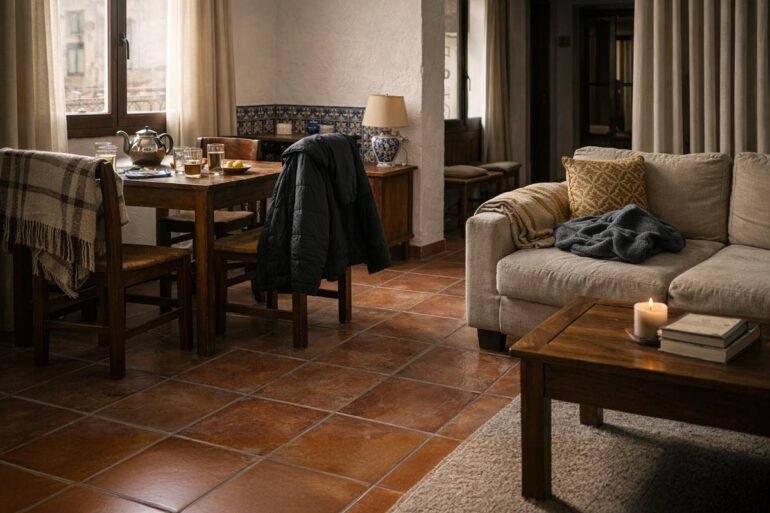
And then there’s something else at play: acoustics. I wrote about it at the end of December. With tiled floors, high ceilings and hard walls, many Spanish homes sound like small echo chambers in winter. Sound reflects. Conversations linger. Silence feels louder than it is — especially when life moves indoors.
Curtains quietly help here too. Not because they were chosen for sound, but because textile naturally absorbs it. A curtain that opens during the day for light and closes in the evening against the cold also takes the edge off sound. The house becomes calmer without anything being “fixed”.
The same applies to rugs, throws and furniture placed exactly where life concentrates. Not everywhere. Only where it’s needed. Acoustic comfort here doesn’t come from design — it comes from use.
A house that responds
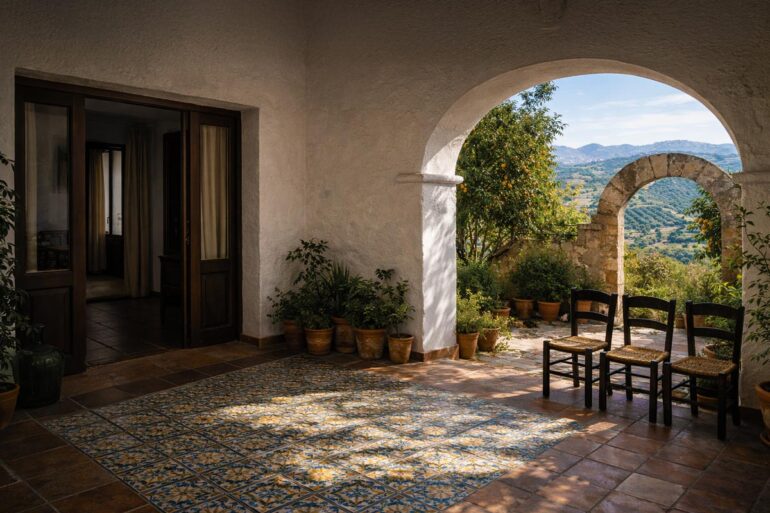
In that sense, curtains follow the same logic as the warm room or the patio in January. They’re not a separate intervention, but part of a system that responds to season, light and behaviour.
Once you see that, you stop searching for solutions and start noticing signals. Where does the light fall? Where does warmth linger? When does the character of the space shift? And how does the house sound at that moment?
Curtains mark those transitions. They don’t close things off permanently — they guide how a space feels.
Invisible, but decisive
The interesting thing is that you barely notice them when they’re used well. The house simply feels right. You only become aware of them when they’re missing or used at the wrong time.
Maybe that’s the essence of comfortable living here. Not trying to control or explain everything. Some elements work best when they quietly do their job.







© 2025 The Sound Of The Costa; All Rights Reserved
