Listeners:
Top listeners:
00:00
00:00
volume_up
chevron_left
-
 play_arrow
Costa Blanca Radio The Sound Of The Costa
-
 play_arrow
FeelGood Radio The Sound Of The Costa
music_note
Spanish December traditions you won’t find in guidebooks
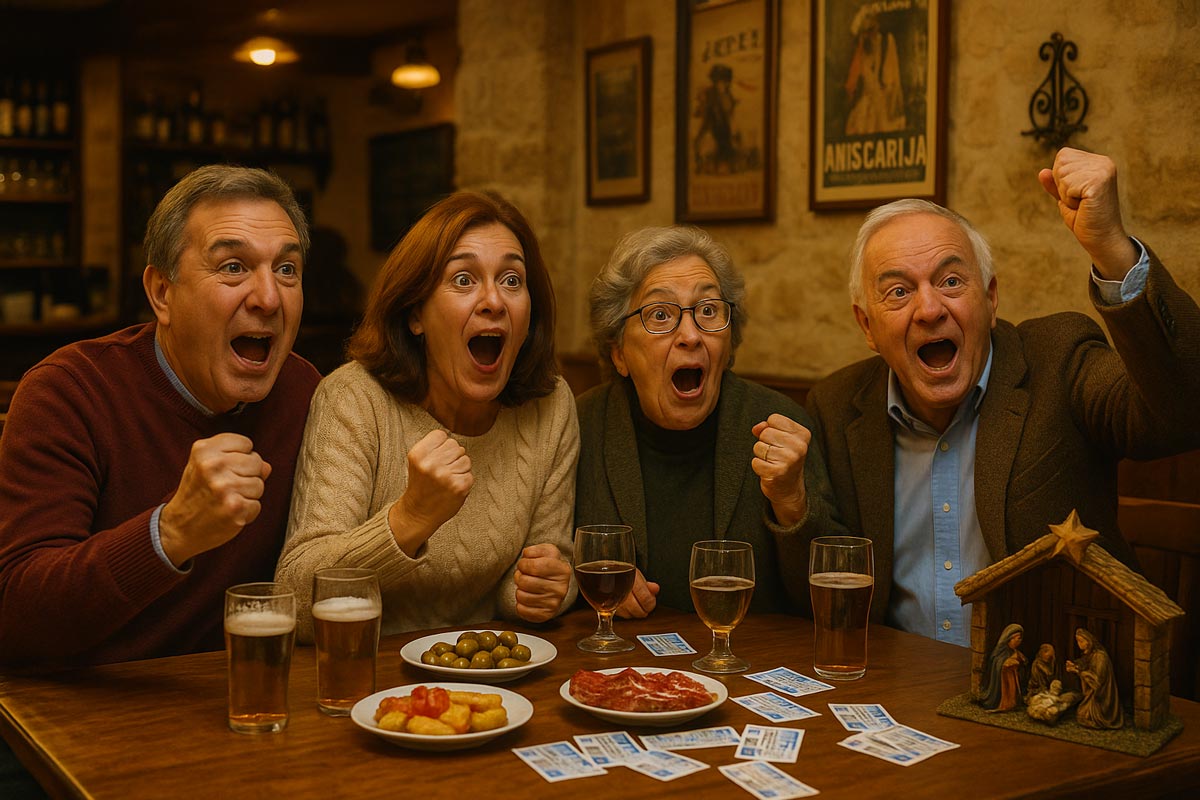
In Spain, December doesn’t begin with cold, but with anticipation. The air is fresh, not sharp. The evenings are longer, but never empty. And in the towns and villages where I’ve been spending these weeks, there’s a gentle sense of tension — not about what needs to be bought, but about what will be shared.
Cafés are busier than usual. Not with people seeking hot chocolate, but with something very Spanish: talking, waiting, watching, feeling part of things. And above all: the Lotería de Navidad.
The hope of an entire country on one paper ticket
The first time I sat in a Spanish café in December, I didn’t understand the atmosphere. People weren’t chatting over drinks; they were whispering. Eyes fixed on the television screen. It felt like football — but without a ball.
The famous Christmas lottery draw, El Gordo, is a national ritual. The children of San Ildefonso sing out the winning numbers in a cadence that’s almost hypnotic. In Benissa, the café fell so quiet you could hear teaspoons clinking in coffee cups.
Nobody truly believes they’ll win. But everyone allows themselves to dream for a moment. And that may be the most beautiful thing about these Spanish December traditions: they’re collective, warm, and unapologetically human.
Nativity scenes as a life’s work
In the Netherlands, nativity scenes are something you buy, set up, and move on from. Here, it’s different. In towns like Gata de Gorgos, Jávea and Altea, entire routes of nativity scenes wind through neighbourhoods: the Ruta de Belenes. Not just in churches, but in garages, on squares and inside cultural centres. Some people work on them for months, building miniature worlds filled with detail.
A man in Jávea told me he adds one new element each year: a fountain, a donkey, an inn. “I need something to look forward to,” he said. I loved that — a private ritual that slowly became public.
Rituals you only notice if you stay long enough
Many of the most beautiful customs never make it into guidebooks. You have to linger to see them.
Like the group of older men comparing their lottery tickets on the same bench every morning. Or children rehearsing school performances in the middle of the street while parents watch on, thermos flasks in hand.
And then there are the zambombas — spontaneous singing evenings that originate in Andalusia but have found their way to the Costa Blanca too. A group of family and friends, a table, a few guitars, and someone beating a zambomba drum. That’s all it takes to bring December to life.
The season of togetherness
What moves me most is how little commercial noise dominates the month. Of course there are shops, lights and busy terraces. But the heart of December here remains social. A month in which neighbours see each other more often, families linger longer at the table, and villages come together through light, sound and small rituals.
Perhaps that’s why December in Spain feels so warm. Not because of the weather, but because of the people. It’s not the grand traditions that make this country special, but the small ones. The shared gaze during the lottery draw. A nativity scene in a garage. A choir echoing across a square.
Things you don’t plan for, but stumble upon. Things you don’t buy, but share.

Latest news

The quiet weeks of January: what remains when nothing is required

Why your house in Spain feels so cold in January (and how people deal with it)

After Three Kings’ Day: how your body responds once the holidays are over

Why coffee at the bar works better than at home in January

2026: after the seventh grape


© 2025 The Sound Of The Costa; All Rights Reserved

