Listeners:
Top listeners:
00:00
00:00
volume_up
chevron_left
-
 play_arrow
Costa Blanca Radio The Sound Of The Costa
-
 play_arrow
FeelGood Radio The Sound Of The Costa
music_note
Christmas in Spain: a celebration that doesn’t end on 25 December
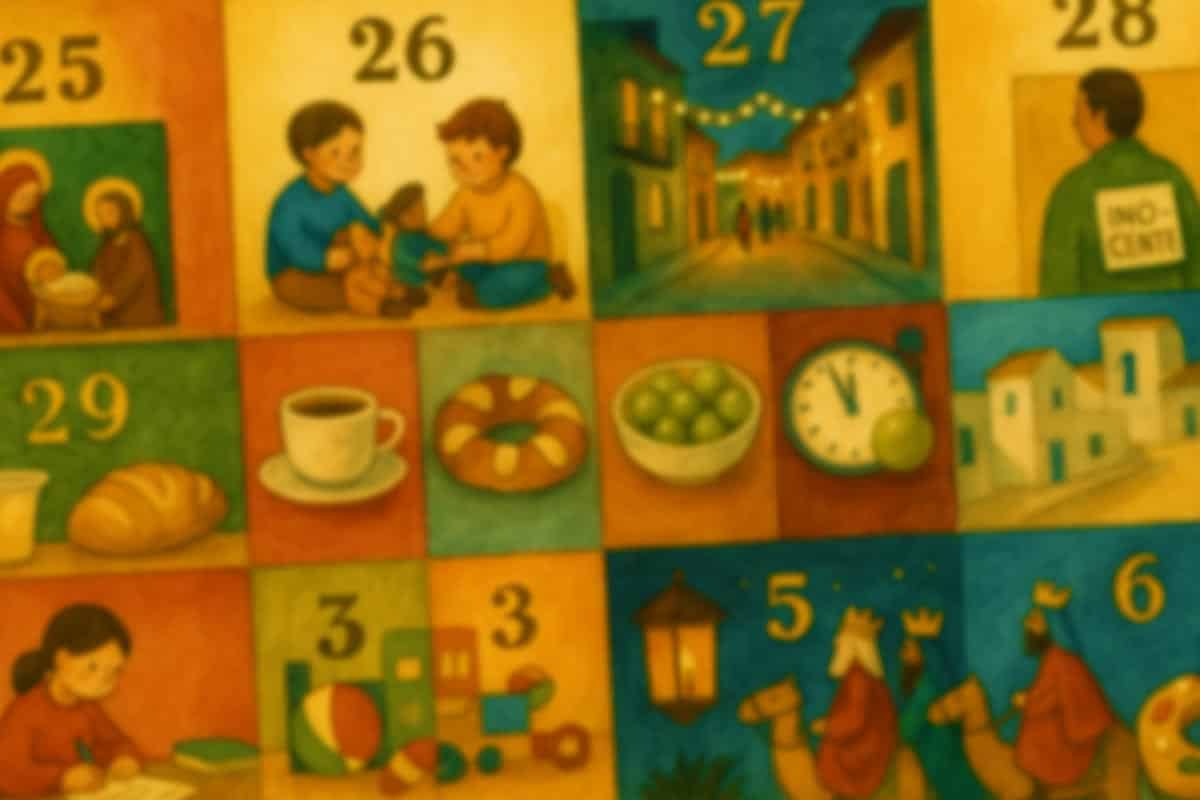
In Spain, 25 December never feels like an endpoint. It’s more of a beginning, a pause, a gentle moment within a much longer stretch of time. Where I once grew up with the idea that Christmas was over almost as soon as it began, here it unfolds like a ribbon woven through the winter weeks.
Christmas in Spain is not a sprint. It’s a sequence of rhythms, encounters and traditions that flow into one another. The warmth isn’t in the presents, but in the time between them.
Nochebuena — the true highlight
The evening of 24 December is very much the heart of the Spanish Christmas. Nochebuena is about family, not spectacle. Streets gradually fall quiet as the scents of fish broth, almonds and roast chicken drift from open kitchens.
Inside, families sit around the table for hours — unhurried, unstructured. Conversations overlap, children play under the table, someone keeps topping up glasses. The evening simply moves along, much like life here does.
Navidad — quiet and gentle
The 25th itself is unexpectedly quiet. No rushing, no shopping frenzy, no piles of wrapping paper on the floor. It feels like an exhale after the night before.
People go for walks, attend mass, drink coffee on the village square. It’s not a day for doing, but for being. A soft pause in the middle of December, in a celebration that is far from over.
A playful turn: Día de los Santos Inocentes
On 28 December, the mood shifts. The air lightens, the tone becomes playful. Día de los Santos Inocentes — Spain’s version of April Fool’s Day — brings small jokes and gentle pranks.
Radio stations air mock news stories everyone recognises but still enjoys. In villages, children giggle over paper signs stuck to someone’s back. It’s a charming interruption in the Christmas season, a reminder that light-heartedness is a tradition too.
The long build-up to what really matters
And just when you think Christmas is fading, it truly begins. In early January you see it everywhere: toy boxes in shops, families discussing what the children will receive, and preparations for parades underway.
The 5th of January is magical. The Cabalgata de Reyes, the procession of the Three Kings, fills the streets. Horses, the smell of hay, music, children shouting, sweets flying through the air. The town buzzes as if summer has returned for one night.
Reyes — the real Christmas morning
On 6 January comes the moment that, in northern Europe, happens on the 25th: children waking up to find their presents. It’s more than a religious tradition; it’s a cultural anchor. A day of breakfast, family, laughter and stories.
And somewhere between the hot chocolate, the paper ribbons and the sound of tearing cardboard, you realise that Christmas is only now complete.
A celebration that lingers
Perhaps that’s the most beautiful thing about Christmas in Spain: it refuses to be confined to a single day. It’s a season that grows slowly, reaches its peak, and then continues to glow warmly for weeks.
You feel it in the streets, in the cafés, in the evening light hanging over a square.
Christmas here doesn’t disappear after midnight. It stays a little longer — just like the people do.
Similar posts




© 2025 The Sound Of The Costa; All Rights Reserved
