Listeners:
Top listeners:
00:00
00:00
volume_up
chevron_left
-
 play_arrow
Costa Blanca Radio The Sound Of The Costa
-
 play_arrow
FeelGood Radio The Sound Of The Costa
music_note
The art of hosting guests on the Costa: relaxation over perfection
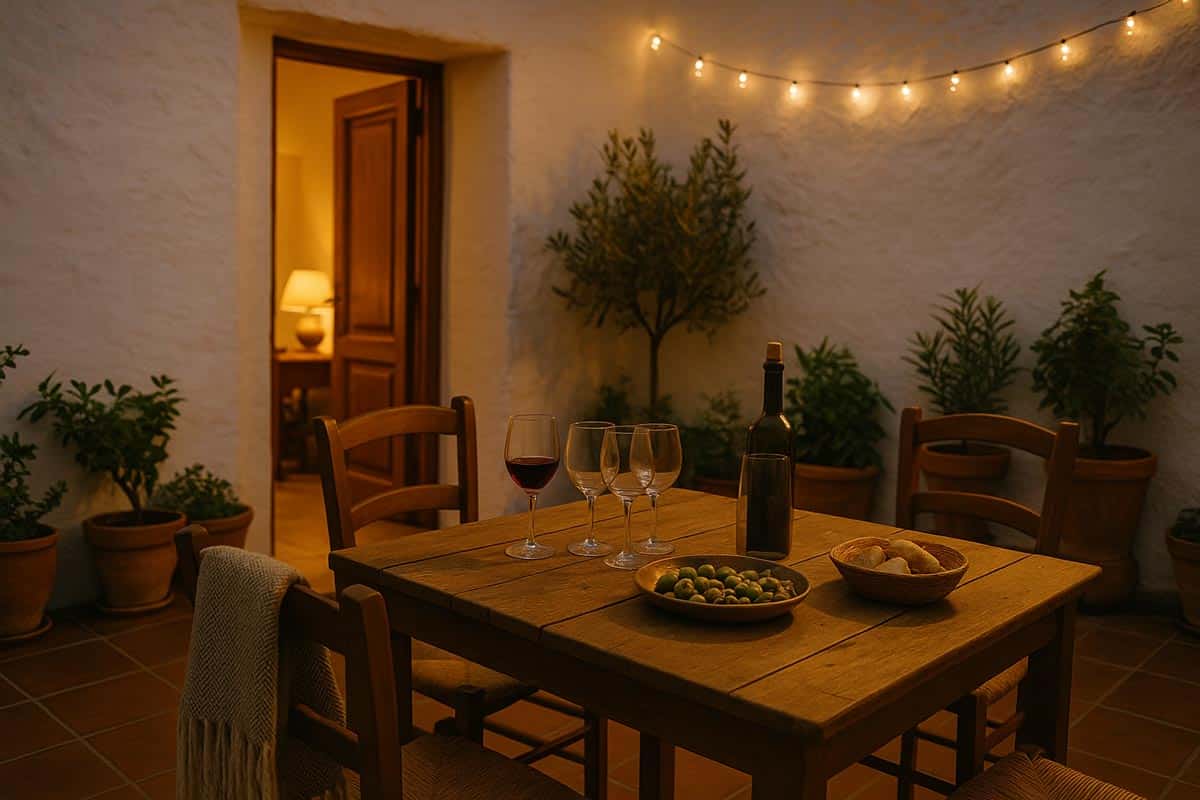
There are countries where hosting guests feels like a kind of performance. The table has to be right, the chairs must match, and someone will inevitably suggest “making it cosy for a moment”, followed by a stressful quarter-hour in which candles, napkins and playlists compete for attention. Spain doesn’t do that.
Here, hospitality doesn’t begin with the house, but with the attitude of the people who live in it. And that may be the most relaxing thing of all.
You notice it when you walk through the neighbourhood. The front door is open more often than closed, as if the house itself has already decided that visitors are welcome, even when no one has announced themselves. A chair is pulled up, an extra plate appears, and before you realise what’s happening there’s bread on the table that didn’t exist ten minutes earlier. It almost feels like magic, but it’s really just an age-old rhythm.
The Spanish table is never “finished”, only open
What always surprises me is that a Spanish table doesn’t need to be perfectly set to feel complete. Sometimes there’s an empty water bottle still standing there, aor a napkin that clearly didn’t survive the day unscathed, or a dish that doesn’t quite match the rest. No one seems to notice. Or rather: no one feels the need to.
Because in Spain, hosting isn’t about presenting, but about extending. The conversation. The time. The evening. As if every meal is quietly saying: stay a little longer.
One of the biggest misconceptions expats sometimes have is the idea that you need to be “prepared”. As if you’re only allowed to invite people over when your house looks like it belongs on an interiors blog. But Spaniards don’t invite people because everything is perfect — they invite them because you’re there.
The unexpected moment is the best moment
There’s a lightness in the way people here deal with visitors. Not by appointment, but by feeling. It’s precisely that lack of planning that makes it work. In England, turning up spontaneously with a bowl of fruit would feel like a social revolution. You announce your visit, wait for confirmation, and even then you ask at the door if it really is a good time.
Here it works differently. In Spain, someone rings the bell with whatever they just picked up at the market, no diary, no expectations. Your house doesn’t have to prove anything. You don’t have to prove anything either. You just say: “Passa, hombre… the kitchen’s still awake.” And the funny thing is: once you adopt that attitude, your home becomes welcoming all by itself. Not through furniture, but through space.
Food as presence, not performance
The most beautiful thing about Spanish hospitality is how little it has to do with cooking. The food is there, of course, but it’s not the main act. There’s whatever there happens to be: a stew that’s been simmering since yesterday, fish picked up spontaneously at the market, or a meal that takes shape halfway through because someone fancies “just one more thing”.
And it works because no one is trying to impress. Food here isn’t an art form that demands applause; it’s a combination of time, company and the shared understanding that no one is in a hurry. It’s the only place I’ve ever seen someone forget to put bread on the table and then say, completely calmly: “Ah well, that’ll come in a minute.”
The real art of hosting
Welcoming guests on the Costa is, above all, about not forcing anything. Not the evening, not the conversation, not the atmosphere. Everything unfolds. Everything works out. Everything lasts exactly as long as it needs to.
Perhaps that’s the essence of it: in Spain, hospitality doesn’t need a shape. It only needs time.
Similar posts







© 2025 The Sound Of The Costa; All Rights Reserved
