Listeners:
Top listeners:
00:00
00:00
volume_up
chevron_left
-
 play_arrow
Costa Blanca Radio The Sound Of The Costa
-
 play_arrow
FeelGood Radio The Sound Of The Costa
music_note
The small Spanish sweets that make December special
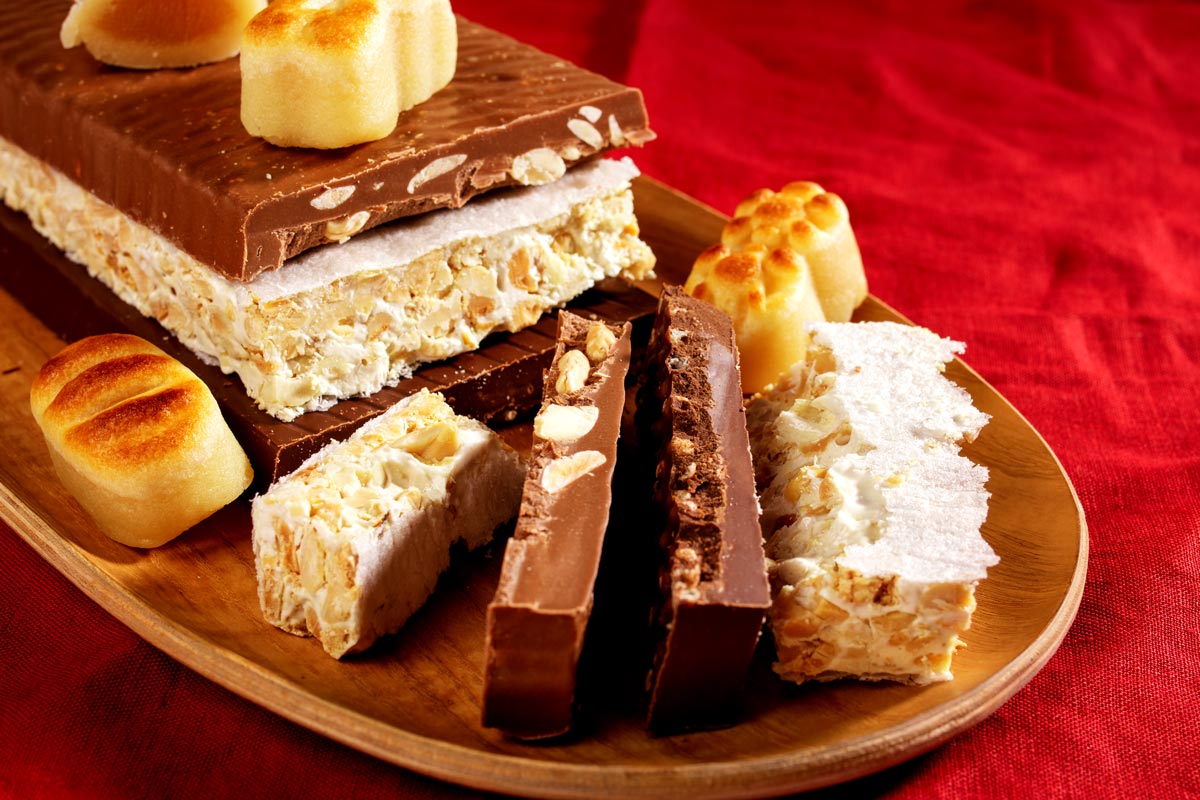
Just like last week, this story begins at the market. In Spain, December announces itself instantly through sweetness. The air fills with the scent of almonds, cinnamon and toasted sugar. Not the sugary excess of Christmas fairs, but the quiet traditions of families who have been baking, rolling, kneading and roasting the same recipes for generations. Along the Costa, December belongs to sweet treats as naturally as festive lights belong to the streets.
Turrón: where it all begins
December starts with turrón, the classic from Alicante and Jijona. Shops display dozens of varieties, but it always comes down to two styles: the hard turrón with whole almonds, and the soft Jijona turrón, almost creamy thanks to finely ground almonds and honey. Both carry protected origin status, so quality is recognised by the Jijona or Alicante seal. This is a sweet that isn’t just eaten, but shared — with neighbours, friends, or as the closing note of a long meal.
Polvorones and mantecados: soft, crumbly and traditional
In Andalusia, polvorones and mantecados are the true December staples. Small, delicate pastries that almost fall apart in your hand, flavoured with almond, lemon or sesame. They look effortless, but that lightness is the craft: real polvorones are shaped by hand, and every region adds its own variation. Cheaper versions tend to be dry; the best ones carry a gentle aroma of toasted almonds.
Mazapán: subtler than you expect
Marzipan often brings to mind heavy sweetness, but Spanish mazapán — especially from Toledo — is far more refined. Small pieces, lightly caramelised, with flavour that depends entirely on the quality of the almonds. In December, bakeries sell them in little boxes, often shaped into figures that vary by region. They may look simple, but they are among Spain’s oldest December traditions.
Roscos de vino: the scent of the holidays
Roscos de vino are ring-shaped biscuits made with wine, aniseed and sesame — typical of southern Spain. You often smell them before you see them. That distinctive aroma instantly signals December. They’re usually served with coffee or as a sweet finish after fish or soup. In many households, they belong to the season as much as Christmas music on the radio.
Buñuelos and churros: December on the street
As the evenings turn cooler, stalls begin appearing across towns and cities, frying churros and buñuelos. Not the tourist versions, but the real thing: lightly crisp edges, straight from the oil, dusted with sugar. Buñuelos — airy little dough balls — are especially popular around holidays and local celebrations. This is sweetness meant to be eaten immediately, often while still walking down the street.
Why December tastes so sweet
Spanish sweet traditions aren’t isolated recipes; they’re woven into the festive season. Their roots lie in centuries-old Catholic customs, the winter harvest of almonds and citrus, and the habit of sharing what you have during the holidays. December becomes a month of small treats rather than elaborate desserts — bites you pass on, take with you, or save for a quiet afternoon.
The taste of a Spanish December
What makes these Spanish sweets special is that they’re everywhere in December, yet never lose their charm. A piece of good almond turrón, a polvorón that gently crumbles, a warm churro on a cool evening — simple pleasures that define the month.
Every bite carries a story. And in December, that story is sweet, modest and rooted in tradition.
Latest news

Why your house in Spain feels so cold in January (and how people deal with it)

After Three Kings’ Day: how your body responds once the holidays are over

Why coffee at the bar works better than at home in January

2026: after the seventh grape

Old & New on the Costa: Traditions to Welcome the New Year in Style


© 2025 The Sound Of The Costa; All Rights Reserved

