Listeners:
Top listeners:
00:00
00:00
volume_up
chevron_left
-
 play_arrow
Costa Blanca Radio The Sound Of The Costa
-
 play_arrow
FeelGood Radio The Sound Of The Costa
music_note
Why your house in Spain feels so cold in January (and how people deal with it)
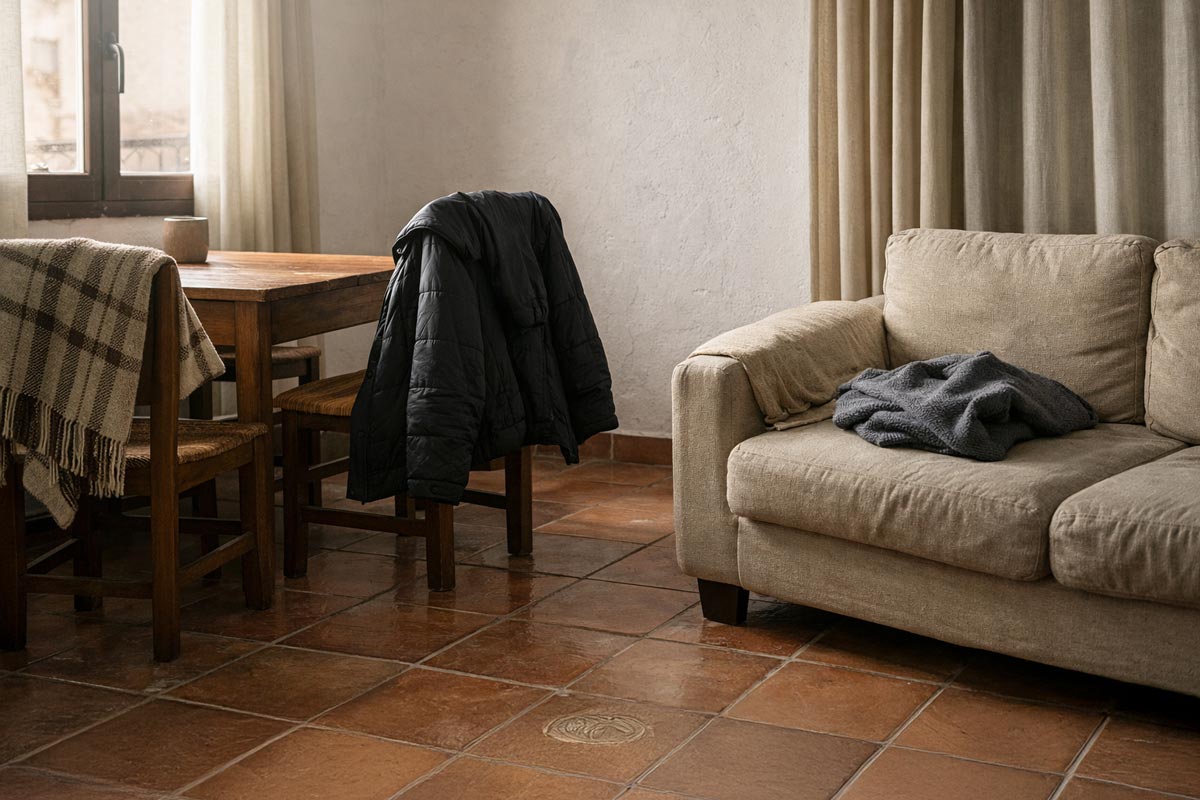
I stood still in the house. Not for long. But long enough to feel it. Outside, the air was soft, almost kind. Inside, the cold crept up slowly, from the floor, along my legs. No draughts, no drama. Just a house that made no effort to keep me warm unless I did something first.
For many newcomers, that comes as a surprise. January in Spain feels mild outdoors, yet indoors the house can feel unexpectedly chilly. For those who’ve lived here longer, it barely registers as a topic. It’s simply part of life. Like the jacket draped over a chair and the throw on the sofa.
Houses built for summer
It’s not the first time I’ve written about this. Most Spanish houses were designed with one season in mind: summer. Thick walls, small windows, shade, ventilation. Everything focused on keeping heat out. Holding warmth in was never a priority. Winters were short, heating expensive or simply unavailable.
You see that reflected in the layout of spaces. Large living rooms without clear divisions. Tiled floors that stay cool. Ceilings that let air circulate. Perfect in July. In January, functional — but only if you know how to read the house.
Comfort here isn’t in the construction, but in how the house is used.
Living in zones instead of square metres
What stands out is that people don’t use their entire house all at once. Not every room counts all the time. During the day, life shifts towards places where the sun comes in. A table by the window. A chair just out of the shade. The rest of the house remains present, but passive.
Heating, if there is any, is used selectively. One room. Sometimes only for a few hours. Not to warm the house, but to make life possible in that spot. That requires choices: where you sit, where you work, where you move.
Movement plays a bigger role than technology. Getting up. Walking to the kitchen. Following the sun through the house. Sitting still belongs to summer here, not winter.
Textiles and timing as quiet helpers
What the house doesn’t do, people solve through behaviour. Thick curtains closed in the evening. Rugs where you tend to stand. Extra layers indoors. Not as a statement, but as a matter of course.
The daily rhythm helps. Mornings are active. Afternoons move with the light. Evenings become compact. You sit closer together — literally. Not out of cosiness, but out of practical logic. Warmth comes from proximity and attention.
That also explains why no one seems particularly bothered by it. The house does what it’s meant to do. The rest is up to you.
Reading instead of correcting
Those who try to make a Spanish house behave like a Northern European one in January often keep correcting it. Extra heaters, constant temperatures, comfort everywhere at once. It’s possible — but it often feels like pulling against something that doesn’t want to cooperate.
Those who read the house as it was intended notice something else. Less friction. More adjustment. The house doesn’t demand modification, only understanding. Not everything has to be comfortable at the same time. Only what you’re actually using.
And perhaps that’s exactly why January here doesn’t feel heavy. The house forces you to choose. And that choice makes life feel more manageable than a perfectly warm, but soulless space.

Latest news

The quiet weeks of January: what remains when nothing is required
Why your house in Spain feels so cold in January (and how people deal with it)

After Three Kings’ Day: how your body responds once the holidays are over

Why coffee at the bar works better than at home in January

2026: after the seventh grape



© 2025 The Sound Of The Costa; All Rights Reserved

